Seed by Seed: The Plant-Based Approach to Hormonal Balance That's Quietly Gaining Ground
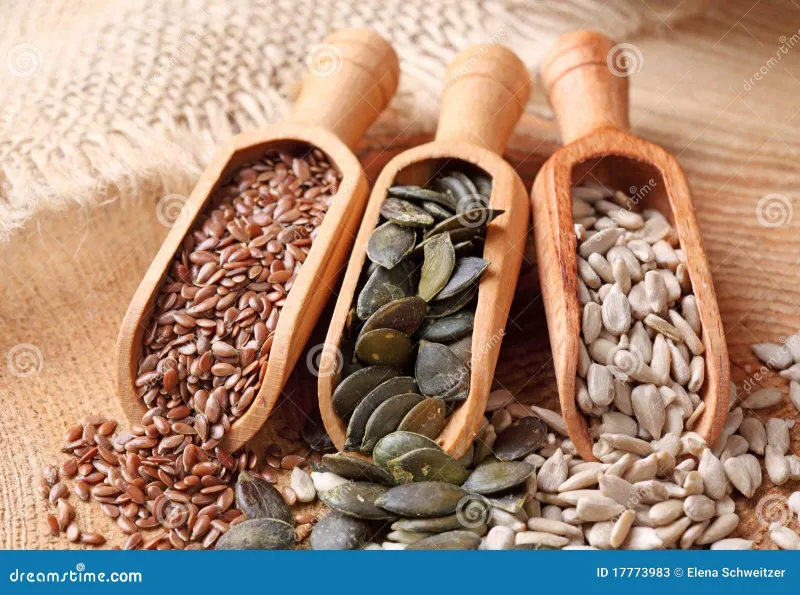
Photo: hemp flax pumpkin sunflower seeds wooden bowls flat lay, via thumbs.dreamstime.com
Let's get one thing out of the way immediately: seed cycling is not going to replace your gynecologist, your therapist, or your prescription medication. It's not magic. It's not a cure. And anyone selling it to you as a guaranteed fix for PCOS, endometriosis, or any other hormonal condition is overstepping what the current evidence actually supports.
Now that we've said that — here's the thing. A lot of plant-based women are quietly doing it anyway, reporting real improvements in energy, mood, and cycle regularity, and incorporating it into their daily eating in ways that are genuinely delicious. And given that the "treatment" involves eating more flaxseeds, pumpkin seeds, sunflower seeds, and hemp seeds — foods that are nutritionally excellent by any standard — the downside risk is, at minimum, pretty low.
Welcome to the seed cycling conversation. Pull up a chair.
What Seed Cycling Actually Is
The basic framework is straightforward. The menstrual cycle is divided into two phases: the follicular phase (roughly days 1–14, from the start of your period to ovulation) and the luteal phase (roughly days 15–28, from ovulation to the start of your next period). Seed cycling assigns specific seeds to each phase based on their nutritional profiles and proposed interactions with hormone production.
Follicular phase: Flaxseeds and pumpkin seeds. Flax contains lignans — phytoestrogens that may support estrogen metabolism — and pumpkin seeds are rich in zinc, which is associated with progesterone production in preparation for ovulation.
Luteal phase: Sunflower seeds and sesame seeds (sometimes swapped for hemp seeds in plant-based adaptations). Sunflower seeds are high in vitamin E and selenium, nutrients associated with progesterone support. Hemp seeds bring a comprehensive amino acid profile and an excellent ratio of omega-3 to omega-6 fatty acids.
The typical recommendation is one to two tablespoons of each seed type daily, raw and freshly ground where possible (particularly for flax, where grinding significantly improves bioavailability).
Where the Science Stands
Honest answer: it's limited but not nothing. There are no large-scale randomized controlled trials specifically on seed cycling as a protocol. What does exist is a body of research on the individual components — lignans and estrogen metabolism, zinc and reproductive health, vitamin E and luteal phase support — that provides at least a plausible mechanistic basis for why this might work.
"The research on flaxseed lignans and hormone metabolism is actually reasonably solid," says registered dietitian Priya Nair, who works with plant-based clients in Chicago. "We know lignans can influence how estrogen is processed and excreted. We know zinc plays a role in follicular development. The seed cycling protocol essentially bundles several evidence-supported nutritional interventions into a cycle-synced eating pattern. Is that going to work identically for everyone? No. Is it nutritionally sound? Absolutely."
Nair is careful to distinguish between what the evidence supports and what the wellness internet claims. "I see seed cycling marketed as a PCOS treatment, and that's where I have to pump the brakes. For someone with a diagnosed hormonal condition, this is a complement to medical care, not a replacement for it."
Why the Plant-Based Adaptation Makes Particular Sense
For women eating primarily or exclusively plant-based, seed cycling lands in interesting territory. The seeds in question are already staples of plant-based cooking — flax and hemp in particular are nutritional workhorses that show up in everything from smoothies to salad dressings to baked goods. The adaptation isn't radical; it's mostly about intentionality and timing.
There's also a specific nutritional logic to the plant-based version. Zinc, for instance, is found abundantly in meat and shellfish in the standard American diet. Plant-based eaters source zinc primarily from legumes, nuts, and seeds — and pumpkin seeds happen to be one of the richest plant sources available. Building them into the first half of the cycle isn't just about seed cycling theory; it's genuinely good nutritional practice for someone not eating animal products.
Similarly, hemp seeds' complete amino acid profile and omega fatty acid balance make them particularly valuable for plant-based women, who sometimes struggle to get adequate omega-3s without fish or fish oil supplements. Incorporating them into the luteal phase addresses multiple nutritional considerations simultaneously.
Real Women, Real Results (And Real Caveats)
Jasmine Torres, a 34-year-old graphic designer in Portland who has eaten plant-based for six years, started seed cycling after a particularly rough stretch of PMS symptoms. "I was skeptical," she says. "I'm pretty science-minded and I knew the evidence was thin. But I was also eating seeds every day anyway, so I figured, what's the actual cost of doing it intentionally?"
Three months in, she reports noticeably reduced bloating and mood swings in the week before her period. She's clear-eyed about what that means. "I can't tell you it's the seeds. I also started tracking my cycle more carefully, which made me more intentional about sleep and stress management around that time. Who knows what's actually driving it? But I feel better, and I'm eating more nutritious food. I'm going to keep doing it."
This is, frankly, a pretty representative testimony. The women who report benefits from seed cycling almost universally describe a constellation of changes — more cycle awareness, more dietary intentionality, sometimes more sleep hygiene — that make it genuinely difficult to isolate the seed effect. That's not a reason to dismiss it. It might actually be the point.
How to Actually Do It: A Practical Guide
The barrier to entry here is low. Here's how to build seed cycling into a plant-based eating pattern without losing your mind:
Follicular phase (days 1–14):
- Add 1 tbsp ground flaxseed to your morning smoothie, oatmeal, or yogurt alternative
- Toss 1 tbsp pumpkin seeds into salads, grain bowls, or eat as a snack
- Make a follicular-phase trail mix: pumpkin seeds, dried cranberries, dark chocolate chips
- Blend flax into homemade salad dressings or stir into hummus
Luteal phase (days 15–28):
- Add 2 tbsp hemp seeds to smoothies — they blend invisibly and add protein and creaminess
- Make a sunflower seed butter toast situation (sunflower seed butter is genuinely excellent and underrated)
- Toss hemp seeds into pasta, grain salads, or sprinkle over roasted vegetables
- Blend sunflower seeds with herbs, garlic, and lemon for a sunflower seed pesto
The golden rule: Grind your flaxseeds. Whole flaxseeds pass through largely undigested. A small coffee grinder dedicated to seeds will run you about $15 and will change your flax game permanently.
The Bottom Line
Seed cycling isn't a revolution. It's not going to appear in a New England Journal of Medicine headline anytime soon. But it's also not snake oil — it's a structured way of incorporating genuinely nutritious foods into your diet in a manner that's timed to your body's natural rhythms. For plant-based women who are already eating seeds daily, the additional ask is minimal. The potential upside, both nutritional and potentially hormonal, is real.
Eat your seeds. Track your cycle. See how you feel. And please, for the love of all things plant-powered, grind your flax.