Congratulations, You've Been Voluntold to Get a Nutrition Degree: How 'Where Do You Get Your Protein?' Made Plant-Based Eaters the Most Informed Diners in America
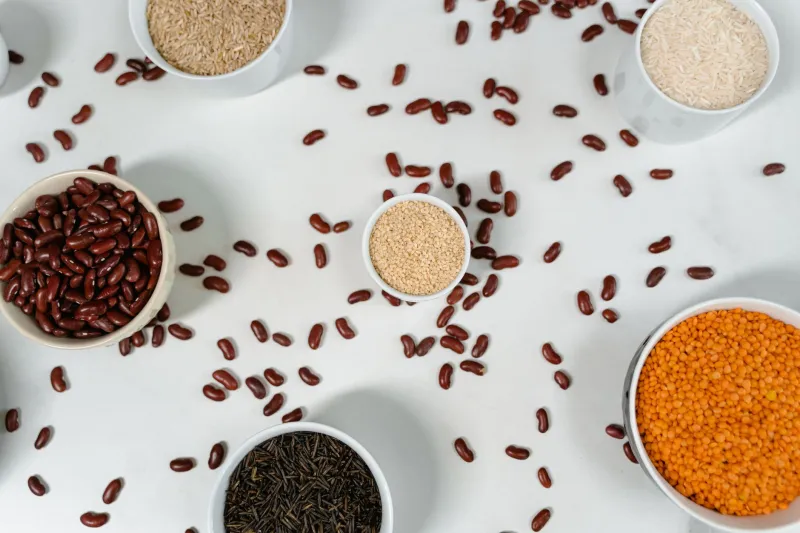
It usually happens around the second or third bite of your beautifully constructed lentil dish. Someone — a relative, a coworker, a stranger at a potluck who has appointed themselves the Protein Police — leans over and delivers the question with the gravity of a Senate subcommittee inquiry: "But where do you get your protein?"
If you've been plant-based for more than fifteen minutes, you've fielded this one. You've probably also, at some point, sighed deeply, recited your rehearsed answer, and quietly wondered why the guy eating a gas station hot dog never gets interrogated about his leucine intake.
Here's the twist nobody saw coming: that exhausting, repetitive, occasionally infuriating question has had a side effect. It has produced, entirely by accident, the most nutritionally educated food community in America.
The Interrogation That Built an Accidental Expert Class
When registered dietitian Maya Okafor started her practice in Chicago eight years ago, she noticed something immediately. Her plant-based clients arrived differently prepared than anyone else. "They'd walk in and start talking about methionine and lysine before I even opened my mouth," she says. "They knew their B12 status, they'd researched iron absorption inhibitors, they could explain the difference between heme and non-heme iron. I was basically just there to confirm what they'd already figured out."
This isn't a coincidence. It's a survival skill forged in the fires of social scrutiny. When your food choices are treated as a public health emergency by every uncle with a grill, you study up. You build your case. You come to the dinner table armed.
The result? A community that can rattle off amino acid profiles the way sports fans cite batting averages — and who, crucially, actually applies that knowledge to what they eat every single day.
What the Protein Panickers Are Missing
Let's briefly address the protein question itself, because it genuinely deserves a proper burial.
The idea that plant-based diets are inherently protein-deficient is nutritional folklore that refuses to die. The average American adult needs roughly 0.8 grams of protein per kilogram of body weight daily — a threshold that a well-planned plant-based diet clears without dramatic effort. A cup of cooked lentils delivers about 18 grams. Tempeh clocks in at 31 grams per cup. Edamame, seitan, black beans, hemp seeds, tofu — the plant kingdom is not exactly running low on the stuff.
The more nuanced conversation — the one plant-based eaters have actually been having for years — is about completeness. Most plant proteins don't contain all nine essential amino acids in ideal proportions in a single source. The old-school response to this was "protein combining," the idea that you needed to pair complementary proteins at every single meal. Rice and beans. Hummus and pita. The whole routine.
Modern nutrition science has since relaxed that rule considerably. Your body maintains a free amino acid pool and draws from it throughout the day, meaning you don't need to engineer every plate like a chemistry experiment. Eat a varied diet, hit your overall protein targets, and your body handles the logistics. Plant-based eaters figured this out — through research, community knowledge-sharing, and yes, the relentless pressure to justify their lunch choices.
Beyond Protein: The Micronutrient Masters
Here's where it gets genuinely interesting, and where the nutritional gap between plant-based eaters and the general population becomes almost comical.
Ask a random sample of Americans what their vitamin D status is. Ask them about their omega-3 intake, their B12 levels, their magnesium consumption. You'll mostly get blank stares and a pivot to a conversation about whether carbs are bad now.
Ask a longtime vegan the same questions. You will receive a detailed breakdown.
This isn't elitism — it's necessity. Certain nutrients require more intentional sourcing on a plant-based diet: B12 (found naturally only in animal products, so supplementation is standard practice), vitamin D (supplement or fortified foods), long-chain omega-3s (algae-based DHA/EPA is the move), iodine (iodized salt or seaweed, used thoughtfully), and zinc (absorption can be lower from plant sources, so variety and preparation matter). Navigating this landscape requires actual knowledge.
"My vegan patients consistently have more detailed health tracking habits than almost any other group I see," says Dr. Priya Nair, a physician and plant-based nutrition researcher based in Portland, Oregon. "They're monitoring labs, they know their numbers, they're proactive. The irony is that the people most often accused of being unhealthy are often the most health-conscious people in the room."
The Seasonal Eating Advantage Nobody Talks About
There's another dimension to this nutritional literacy that gets less airtime: plant-based eaters tend to be deeply attuned to seasonal eating in ways that have real nutritional payoffs.
When your diet is built around plants, the calendar matters. Spring means asparagus and peas. Summer brings tomatoes and corn. Fall delivers squash and root vegetables in abundance. Winter calls for hearty legumes and preserved foods. This isn't just romantic locavore stuff — it's a practical nutritional strategy. Seasonal produce is fresher, more nutrient-dense, and often more bioavailable than its off-season, long-hauled counterparts.
This seasonal fluency also creates a relationship with food that most Americans have lost entirely. When you know that kale hits differently in November (cold snaps increase its sugar content, making it genuinely sweeter), you're operating on a level of food knowledge that no amount of macro-tracking apps can manufacture.
Flipping the Script on the Tired Debate
Here's the part that should make everyone uncomfortable in the best possible way: the people who ask plant-based eaters about protein are, statistically, probably not thinking much about their own nutrition at all.
The average American consumes more than enough protein — often significantly more — but is also chronically under-consuming fiber, falling short on potassium, and not getting nearly enough of the phytonutrients, antioxidants, and anti-inflammatory compounds that are abundant in plant foods. The American diet is a protein-adequate, nutrient-sparse situation, and the people most likely to interrogate vegans about it are not consulting registered dietitians on the regular.
This isn't a gotcha. It's an invitation. The nutritional literacy that plant-based eating demands — almost involuntarily, through years of social pressure and defensive research — is genuinely useful knowledge for everyone. Understanding amino acid variety, the role of phytates in mineral absorption, the difference between fat-soluble and water-soluble vitamins: none of this is exclusively relevant to people who eat lentils.
It's just that plant-based eaters are the ones who got voluntold to learn it.
The Unexpected Gift of Being Questioned at Every Meal
Is it annoying? Deeply. Is it fair that one dietary community bears the burden of defending choices that are, by most public health metrics, pretty solid? Absolutely not.
But there's a strange silver lining rotting beautifully at the bottom of all this. The plant-based community has been stress-tested into nutritional competence. They've been interrogated into expertise. They've been forced, by the collective skepticism of a meat-centric food culture, to actually understand what they're eating and why.
So the next time someone asks where you get your protein, feel free to tell them. In detail. With citations.
They asked for it.