Your Spice Rack Is Doing More Work Than You Know: The Global Blends Saving Plant-Based Cooking
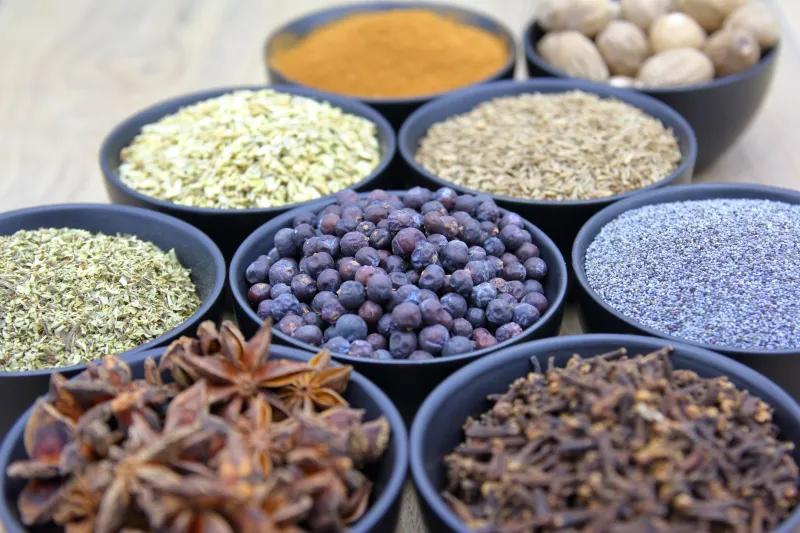
There's a moment that happens to almost every new plant-based cook. You've removed the meat from a recipe you've made a hundred times. You've followed every other instruction. You've been patient. And then you taste it, and something is just... absent. Not bad, exactly. Just hollow in a way that's hard to name.
What you're tasting is the absence of everything meat was quietly doing behind the scenes — the fat, the amino acid depth, the Maillard reaction browning, the collagen-rich body. Meat, it turns out, was a flavor delivery system masquerading as a protein source. And when you remove it, you need something to fill the void.
Enter the spice rack. Specifically, enter the spice rack of every culinary tradition that built extraordinary flavor without centering animal protein — which, if you look at the actual sweep of global food history, is most of them.
Why Western Spice Habits Were Never Going to Cut It
"American cooking, broadly, has a spice vocabulary problem," says James Osei, a culinary educator based in Chicago who teaches plant-based cooking workshops. "Salt, pepper, garlic powder, maybe some Italian seasoning. That's the toolkit most home cooks are working with. And that toolkit was designed to support a main protein, not to be the main event."
This is the core problem. When spice plays a supporting role, you need less of it, less complexity, less layering. But when vegetables, legumes, and grains are the whole show, spice has to step up into a leading role it was never quite asked to play in the standard American kitchen.
Cultures that have historically cooked plant-forward diets — by necessity, by tradition, or by both — developed spice systems of extraordinary sophistication. And plant-based cooks across the US are finally raiding those systems with the energy of someone who just discovered their neighbor has a better pantry.
The Blends Doing the Heavy Lifting
Berbere is the one that tends to stop people mid-bite. The foundational spice blend of Ethiopian cuisine, berbere combines dried chiles with fenugreek, coriander, korarima (Ethiopian cardamom), rue, ajwain, and a rotating cast of supporting aromatics that varies by region and household. The result is something deeply warming, faintly smoky, and genuinely complex in a way that builds across a meal rather than hitting all at once.
On roasted cauliflower, berbere is transformative. On lentils — particularly the red lentil stew known as misir wat — it creates something that skeptics of plant-based eating tend to go quiet over while they eat a second bowl. "Berbere does everything you want a spice blend to do," says Osei. "It adds heat, yes, but also earthiness, sweetness, and this deep savory quality that makes vegetables taste like they mean business."
Za'atar works differently — it's brightness rather than depth. The Lebanese and broader Levantine blend of dried thyme, sumac, sesame seeds, and salt (with regional variations that could fuel an entire separate argument) brings an herbal, slightly tangy, nutty quality that lifts ingredients rather than anchoring them. Stirred into labneh alternatives, scattered over roasted vegetables, or mixed with good olive oil for bread dipping, za'atar is what you reach for when a dish needs to wake up rather than settle in.
Garam masala is probably the most familiar on this list for American cooks, but familiarity has bred a certain carelessness. Most home cooks are using pre-ground garam masala that's been sitting in a jar for two years, and it shows. "Garam masala is a finishing spice," explains Kavita Rao, a food writer and recipe developer in the Bay Area who specializes in regional Indian vegetarian cooking. "It's added at the end, or bloomed fresh. It's not a background player. When it's treated correctly, it transforms a dish. When it's treated like an afterthought, it just makes things smell vaguely Indian without actually delivering."
Fresh garam masala — toasted whole spices ground at home, or sourced from a quality spice shop with known turnover — is a revelation. Applied to roasted chickpeas, simmered into a tomato-based curry, or used to season a potato filling, it delivers warmth and complexity that feels almost architectural.
Dukkah is the wildcard that more plant-based cooks should be reaching for. The Egyptian condiment of hazelnuts or other nuts blended with coriander, cumin, sesame, and salt is technically more texture than spice blend, but it does something none of the others quite manage: it adds fat, crunch, and flavor simultaneously. Pressed into the crust of roasted beets, scattered over hummus, or used as a dip alongside olive oil and bread, dukkah makes plant-based dishes feel abundant in a way that's hard to achieve otherwise.
The Science of Why This Works
The reason global spice blends are so effective in plant-based cooking comes down to what food scientists call flavor volatiles — the aromatic compounds that register in your nose and brain as complexity and satisfaction. Meat carries its own volatiles, generated through fat rendering and protein browning. Without meat, you need to supply those volatiles externally.
Many of the compounds in complex spice blends — the terpenoids in coriander, the pyrazines in cumin, the sulfur compounds in fenugreek — mimic or complement the same flavor signals that cooked meat generates. You're not fooling anyone into thinking they're eating chicken. You're just ensuring that the plant-based dish hits enough flavor receptors that the brain registers it as complete.
"Spice layering is basically flavor architecture," says Rao. "You're building a structure. Base notes, mid notes, high notes. When it's done well, you don't think about what's missing. You're just eating something that tastes whole."
A Practical Buying Guide for the Serious Plant-Based Kitchen
Quality matters more than quantity here. A small jar of excellent berbere from a specialty spice retailer will outperform a large jar of grocery store generic every single time. Look for:
- Berbere: Burlap & Barrel, Brundo Spice Co. (Ethiopian-owned, excellent sourcing), or make your own from a trusted recipe.
- Za'atar: Kalustyan's (available online), Spicewalla, or any Middle Eastern grocery store where turnover is high.
- Garam masala: Buy whole spices and grind your own — cumin, coriander, cardamom, black pepper, cinnamon, cloves, nutmeg. Toast lightly, grind fresh. The difference is not subtle.
- Dukkah: Trader Joe's actually carries a decent version. For something more serious, Nuts.com sells the components and a blend recipe, or look at specialty food shops.
The Deeper Point
The spice rack rebellion isn't really about replacing meat. It's about recognizing that the most sophisticated flavor traditions in human history were built around plants, and that American cooking — with its relatively impoverished spice vocabulary — has simply been leaving most of that tradition on the table.
When a plant-based home cook reaches for berbere instead of salt and pepper, they're not compensating. They're graduating. And the food they're making is better for it — not better despite the absence of meat, but genuinely, measurably, plate-lickingy better.