Beyond Oatmeal: The Secret Breakfast Grains That Plant-Based Diehards Are Quietly Hoarding
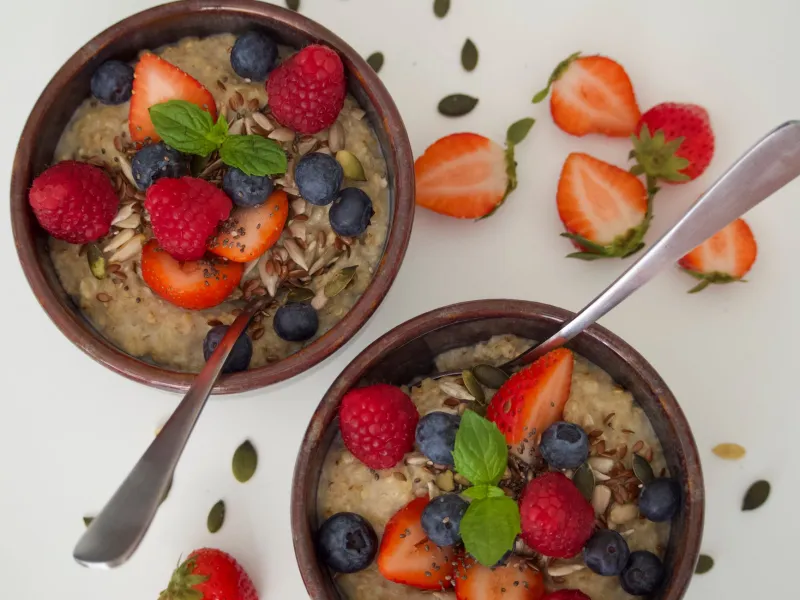
Somewhere between your third smoothie bowl and your fourteenth variation of overnight oats, something snapped for a certain kind of plant-based eater. Not dramatically. Not with a manifesto. Just quietly, one Tuesday morning, with a bag of Bob's Red Mill farro and a stubborn refusal to be boring before 9 a.m.
Welcome to the grain porridge underground — a loosely organized, deeply passionate, and occasionally insufferable community of breakfast adventurers who have decided that oatmeal, bless its heart, is no longer enough.
The Problem With Oatmeal (Besides Everything Being Fine With Oatmeal)
Let's be clear: oatmeal is not the villain here. It's a perfectly good food that has carried plant-based breakfasts on its sturdy, soluble-fiber-rich back for decades. But there's a reason that every plant-based food account eventually hits a wall. You can only photograph a mason jar of oats so many different ways before the algorithm and your soul both give up.
The grain porridge movement isn't anti-oat. It's pro-everything-else. And "everything else" turns out to be a surprisingly vast and historically rich landscape that most American breakfast tables have completely ignored.
"People don't realize how many civilizations built their entire morning around a grain that isn't oats," says Maya Okonkwo, a home cook in Atlanta who runs a small newsletter dedicated entirely to global porridge traditions. "Teff in Ethiopia. Congee across East Asia. Millet porridge in West Africa. Spelt in medieval Europe. We basically exported one grain to the world and then forgot the rest existed."
The Grains Worth Getting Obsessed Over
Farro is probably the gateway drug. Ancient, nutty, and chewy in a way that feels genuinely satisfying rather than just texturally aggressive, farro porridge is what you make when you want oatmeal to have more going on. It takes longer — yes, you should soak it overnight, and yes, that does require remembering to do something before bed — but the payoff is a bowl with actual structural integrity. Top it with roasted figs, a drizzle of tahini, and a pinch of flaky salt, and you have something that could reasonably be served at a restaurant charging $18 for it.
Amaranth is the one that tends to radicalize people. Tiny, technically a pseudocereal, and absolutely packed with protein in a way that makes the "where do you get your protein" crowd temporarily quiet, amaranth cooks into something almost pudding-like. It's rich. It's slightly earthy. Simmered in oat milk with cardamom and topped with mango and toasted coconut, it reads as indulgent in a way that no amount of fancy oatmeal toppings quite achieves.
Teff is where the breakfast cult gets serious. The grain that forms the base of injera — the spongy, tangy Ethiopian flatbread — teff porridge, called genfo, has been a staple morning meal in the Horn of Africa for centuries. As a porridge, it's dense, mildly sweet, and deeply satisfying. "The first time I made teff porridge, I understood why people have been eating this for thousands of years," says Darius Webb, a food writer in Minneapolis who spent three months cooking through African grain traditions. "It holds you. Like, genuinely holds you until lunch. No snack required."
Spelt is the hipster cousin of wheat that actually has a legitimate claim to your attention. Milder than farro but still substantially more interesting than rolled oats, spelt porridge has a gentle sweetness that plays beautifully with stone fruits and honey alternatives. It's also having a quiet moment in the natural foods world as people realize that ancient wheat varieties digest differently than modern heavily-processed wheat — though we'll leave the full nutritional rabbit hole for another day.
The Badge of Honor Nobody Asked For (But Everyone Wants)
Here's the part where we have to be honest about what's really happening in the grain porridge community. Yes, these breakfasts are genuinely delicious and nutritionally excellent. But there's also a certain status attached to pulling out a bag of heirloom blue corn grits or single-origin teff at a Sunday brunch and watching people ask questions.
Mastering obscure grain porridges has become a kind of plant-based flex — the breakfast equivalent of knowing your wine regions or being able to identify a mushroom in the wild. It signals that you've done the reading. That your plant-based practice isn't a diet you're tolerating but a culinary worldview you're actively exploring.
"I won't pretend there isn't some nerdiness to it," admits Priya Sharma, a home cook in Portland who posts her porridge experiments to a following of about 4,000 equally grain-obsessed followers. "But honestly, the nerdiness is part of why I love it. There's always more to learn. Every grain has a whole history."
How to Actually Start Without Losing Your Mind
The barrier to entry is lower than the grain cult would have you believe. Most of these grains are available at Whole Foods, specialty grocery stores, or online. Bob's Red Mill carries farro, spelt, and amaranth. Teff flour and whole teff are increasingly common at African and Ethiopian grocery stores in major cities, and readily available on Amazon if your city hasn't caught up yet.
Start with amaranth if you want immediate results. It cooks in about 20 minutes without soaking, and its naturally creamy texture makes it the most forgiving. Use a 1:2.5 ratio of amaranth to liquid (water, oat milk, or a combination), bring to a boil, then simmer low and slow. Sweeten with maple syrup, add a pinch of cinnamon and cardamom, and top with whatever fruit is looking good at the market.
For farro, soak overnight and then simmer for 30-40 minutes. The extra time is genuinely worth it. Treat the finished porridge like risotto — it wants fat (coconut cream or a good nut butter), salt, and something acidic or bright to balance it.
Teff is best cooked at a ratio of 1:3, simmered for 15-20 minutes while stirring regularly. It thickens fast. Don't walk away from it.
The Bigger Picture in Your Bowl
What the grain porridge movement is really about — beneath the Instagram aesthetics and the gentle competitive energy — is a reconnection to food traditions that industrialized American breakfast culture largely abandoned. These grains fed civilizations. They were domesticated, cultivated, and perfected over thousands of years by people who understood that breakfast should actually keep you going.
In a plant-based kitchen, that history matters. Every bowl of teff porridge is a small act of culinary archaeology. Every pot of amaranth is a quiet argument that plant-based eating isn't a deprivation exercise — it's an invitation to eat more broadly, more curiously, and more deliciously than the cereal aisle ever imagined.
Oatmeal will always have a place at the table. But the table, it turns out, is a lot bigger than we thought.