Leaves, Legumes, and Leaderboards: How Plant-Based Athletes Are Quietly Wrecking the Competition
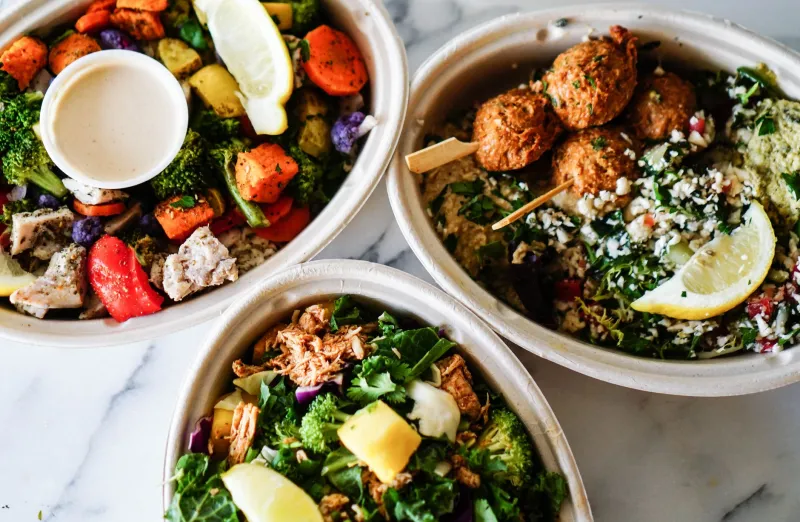
Let's set the scene. You're a Division I linebacker. You wake up at 5 a.m., hit the weight room, and then sit down to a breakfast of... a tofu scramble with black beans, spinach, and nutritional yeast. Your teammates stare. Your coach squints. Your mom calls to ask if you're "doing okay."
And then you go out and have the best season of your career.
This is not a hypothetical. This is increasingly the lived reality for a growing number of elite American athletes who have quietly — and in some cases, very loudly — gone plant-based. And the results are forcing a lot of people to reconsider everything they thought they knew about protein, performance, and the sacred post-workout chicken breast.
The Protein Myth Has a PR Problem
Here's the thing about protein: Americans are absolutely, certifiably obsessed with it in a way that nutritional science has never quite endorsed. We've been sold the idea that animal protein is the gold standard — the only real, complete, serious-athlete-worthy fuel — for so long that questioning it feels almost unpatriotic.
But registered sports dietitian Maya Hollins, who works with several professional athletes in the Pacific Northwest, says the obsession is largely misplaced. "The question I get most often is, 'But where do you get your protein?' And my answer is always: from the same place the strongest land animals on earth get theirs. Plants."
Hollins explains that the real issue isn't the source of protein — it's the strategy. "Plant proteins are not incomplete in any meaningful functional sense if you're eating a varied diet. The myth of the 'incomplete protein' has been largely debunked, but it's incredibly sticky. People love a simple story, even when the science has moved on."
What plant-based athletes do need to be thoughtful about is amino acid diversity — specifically leucine, which triggers muscle protein synthesis. Foods like edamame, tempeh, and soy-based proteins are leucine-rich and, according to Hollins, "can absolutely hit the same targets as a chicken breast when you're building a meal plan with intention."
Real Athletes, Real Plates
So what does "intention" actually look like on a Tuesday after a two-hour training session?
We spoke with Marcus Delaney, a competitive ultramarathon runner based out of Boulder, Colorado, who's been fully plant-based for four years. His post-run recovery meal sounds like it came straight off a Dead Beet Eats recipe card: a massive bowl of brown rice, roasted chickpeas, steamed edamame, avocado, shredded purple cabbage, and a miso-tahini dressing that, in his words, "tastes like something a wizard made."
"People assume I'm eating sad salads and suffering," Delaney laughs. "But I'm eating more food than I ever did when I was eating meat. More volume, more variety, more color. And my recovery times have genuinely improved. I can't say it's only the diet — training, sleep, stress all matter — but I feel better at 34 than I did at 26."
Delaney's experience lines up with what performance coach and exercise physiologist Dr. Renata Voss has been seeing across a range of sports disciplines. "Inflammation is one of the biggest enemies of athletic recovery," she explains. "And a diet high in saturated fat and processed red meat is a pro-inflammatory diet. When athletes switch to whole-food plant-based eating, many of them report faster recovery, less joint pain, and better sleep quality. The anti-inflammatory properties of plant foods are real and well-documented."
The Supplement Question (It's Not as Scary as You Think)
We're not going to pretend plant-based athletes never need supplements. That would be dishonest, and frankly, a little annoying. The nutrients most worth paying attention to are B12, vitamin D, omega-3 fatty acids (specifically EPA and DHA), iron, zinc, and creatine — all of which can be lower in plant-based diets or require a conversion step the body doesn't always perform efficiently.
But here's the plot twist: most meat-eating athletes aren't getting optimal levels of these nutrients either. They're just not being told to worry about it.
"The supplement conversation gets weaponized against plant-based athletes in a way that's pretty unfair," says Hollins. "I have plenty of omnivore clients who are D-deficient and iron-low. The difference is nobody uses that to argue they should stop eating meat." A well-planned plant-based diet paired with targeted supplementation is, by most accounts, entirely sufficient for elite-level performance.
Algae-based omega-3 supplements, for what it's worth, are having a genuine moment. They're the original source — fish get their omega-3s from algae, so cutting out the middleman (the fish) is both more efficient and considerably less controversial at dinner parties.
The Roster Is Growing
The list of openly plant-based or plant-forward professional athletes in the US has expanded dramatically in the past decade. Tennis players, NFL linemen, NBA stars, Olympic weightlifters, and endurance athletes across disciplines have all gone on record crediting plant-based eating with extending their careers or accelerating their recovery. Some are fully vegan. Others are what the nutrition community calls "flexitarian" or "plant-predominant" — eating mostly plants with occasional animal products.
Dr. Voss sees this shift as significant. "When you have athletes at the absolute top of their sport making this choice and performing at historic levels, it becomes very difficult to maintain the argument that plant protein is somehow inferior. The data is walking around in the form of people who are faster, stronger, and recovering better."
The cultural shift is happening in college athletics too. Several NCAA programs have begun incorporating plant-forward meal planning into their athletic dining facilities, driven partly by athlete demand and partly by sustainability goals. It turns out the kids who grew up watching environmental documentaries on Netflix have opinions about what's in the training table buffet.
What You Can Actually Eat (The Fun Part)
For those of us who are not elite athletes but are perhaps training for a 5K or just trying to feel less like a deflated balloon after a workout, the takeaway is genuinely good news. You don't need a sports dietitian, a personalized supplement protocol, or a wizard to make plant-based eating work for your active lifestyle.
The basics: eat enough total calories (under-eating is the real enemy), prioritize protein-dense plant foods at every meal (tofu, tempeh, edamame, lentils, black beans, seitan, hemp seeds), and don't be afraid of carbohydrates — your muscles run on glycogen, which comes from carbs, and plants have plenty.
A simple high-protein plant-based training day might look like: a smoothie with pea protein, frozen mango, spinach, and flaxseed in the morning; a big lentil and quinoa bowl with roasted vegetables for lunch; a handful of mixed nuts and an apple mid-afternoon; and a dinner of tempeh stir-fry with edamame, broccoli, and brown rice. That's somewhere in the neighborhood of 100-130 grams of protein, depending on portions. Not bad for a dead beet.
The Bottom Line
The protein paradox isn't really a paradox at all once you look at the evidence. Plants can fuel elite athletic performance. The science supports it, the athletes are proving it, and the nutritionists have been trying to tell us for years. The only thing that hasn't caught up is the cultural narrative — and that, slowly but surely, is changing.
So the next time someone at the gym asks where you get your protein, feel free to smile, flex, and point to your chickpea bowl. The results will speak for themselves.