Rot Your Way to Flavor Town: Why Fermentation Is the Plant-Based Chef's Most Powerful Secret
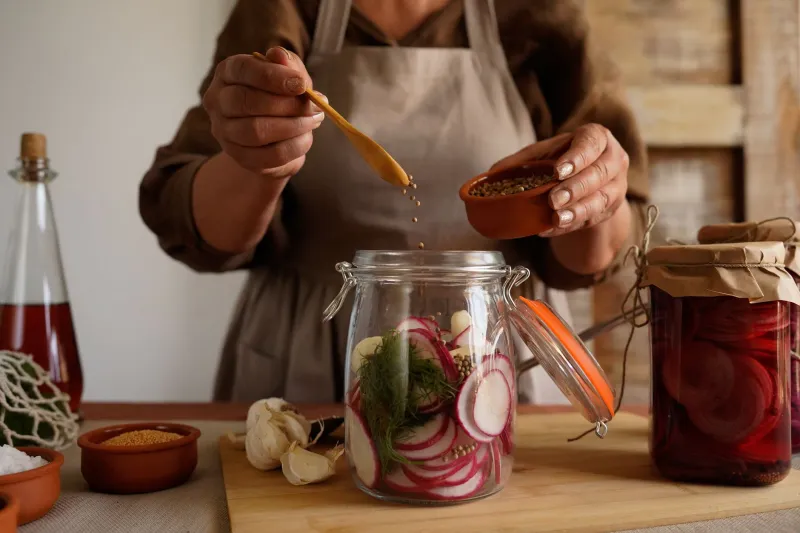
Let's get one thing straight: the best thing that ever happened to plant-based cooking didn't come from a Silicon Valley food lab or a celebrity chef's Instagram feed. It came from a clay pot buried in the ground roughly ten thousand years ago. Fermentation — the gloriously ancient, occasionally pungent process of letting microbes do your culinary heavy lifting — is having a full-blown moment in American kitchens, and plant-based cooks are leading the charge.
If you've ever bitten into a properly funky piece of tempeh, slurped a bowl of miso soup that somehow tasted like the entire forest floor in the best possible way, or discovered that a spoonful of kimchi transformed your sad desk lunch into something worth actually eating, you already understand the power we're talking about. The rest of you? Pull up a chair. Class is in session.
What Fermentation Actually Does (Besides Smell Like Your College Roommate's Gym Bag)
Here's the science, stripped of the boring parts: fermentation is what happens when bacteria, yeast, or fungi break down sugars and starches in food. The byproducts of that process — acids, alcohols, enzymes, and a whole constellation of flavor compounds — are what create the complexity that chefs and food nerds obsess over.
For plant-based cooking specifically, fermentation solves a problem that's haunted vegetarian cuisine since roughly forever: the umami gap. Umami, that elusive fifth taste often described as savory, meaty, or deeply satisfying, is abundant in animal products. It's in aged cheese, cured meats, fish sauce. For years, plant-based cooking struggled to replicate that gut-punch of savoriness without reaching for something that used to have a face.
Fermented foods are loaded with glutamates — the naturally occurring compounds responsible for umami. Miso paste, soy sauce, tempeh, nutritional yeast (fermented, technically), aged vinegars, and lacto-fermented vegetables all bring that savory depth to the table without a single animal in sight. It's not a workaround. It's a straight-up upgrade.
The Chefs Turning Funk Into Fine Dining
Across the country, a new generation of plant-based chefs isn't just using fermented ingredients — they're building entire menus around them.
In Chicago, chefs at forward-thinking plant-based restaurants are aging their own misos from black garlic and chickpeas, creating umami pastes with flavor profiles that would make a Japanese grandmother nod slowly in approval. In Brooklyn, small-batch fermentation studios are producing koji-cured vegetables — a technique borrowed from Japanese sake and miso production — that develop a silky, almost buttery texture with a depth of flavor that takes weeks to achieve and about four seconds to devour.
Down in Asheville, North Carolina — a city quietly establishing itself as one of America's most interesting food towns — a handful of plant-forward restaurants are incorporating house-made tepache (fermented pineapple), shrubs, and drinking vinegars into both their cocktail programs and their savory sauces. The line between the bar menu and the kitchen is dissolving, and fermentation is the reason.
What's striking about talking to these cooks isn't their technical vocabulary or their equipment lists. It's their genuine, almost evangelical enthusiasm for the waiting. Fermentation is the opposite of the instant-gratification culture that dominates American food media. You can't rush a good miso. You can't speed-run kimchi. And somehow, in a culture that invented the drive-through, people are falling in love with a process that operates on its own schedule.
Your Fermentation Starter Pack (No Lab Coat Required)
Here's the good news: you don't need a commercial kitchen, a culinary degree, or a tolerance for significant financial risk to start fermenting at home. You need a jar, some salt, and a little patience.
Quick Kimchi (Ready in 3–5 Days) Napa cabbage, gochugaru (Korean red pepper flakes), garlic, ginger, scallions, and a fermented paste base of your choice. Massage the cabbage with salt, let it sit for an hour to release water, then combine everything and pack it tightly into a jar. Leave it on your counter, burp the jar daily like a very spicy baby, and in three to five days you'll have something that makes every grain bowl, taco, and grilled cheese it touches approximately 40% more interesting.
Miso-Glazed Everything Buy a good white or red miso paste from your local Asian grocery store or Whole Foods (the stuff in the refrigerated section, not the shelf-stable packets). Whisk it with mirin, a little rice vinegar, and a touch of sesame oil. Use it as a glaze for roasted carrots, eggplant, cauliflower steaks, or tofu. Broil until caramelized. Try not to eat it straight off the pan. Fail. Eat it straight off the pan.
Tempeh, But Make It Interesting Tempeh gets a bad reputation because most people encounter it in its most boring form: sliced thin, pan-fried without any seasoning, served with a look of grim nutritional obligation. Don't do that. Marinate tempeh overnight in soy sauce, smoked paprika, apple cider vinegar, and maple syrup. Then crumble it and crisp it in a cast iron skillet until it's almost aggressively savory. Put it on tacos. Put it on pizza. Put it on literally anything.
The Bigger Picture: Why This Matters Beyond the Plate
The fermentation renaissance isn't just about flavor, though flavor is an excellent reason on its own. It's also a quiet act of reclaiming food culture from the industrial system that spent decades convincing Americans that processed, shelf-stable, nutritionally inert products were the pinnacle of convenience and modernity.
Fermented foods are, by definition, alive. They change over time. They respond to their environment. They are the culinary opposite of a vacuum-sealed pouch with a two-year shelf life. In a food landscape increasingly dominated by ultra-processed everything, there's something genuinely radical about putting vegetables in a jar with salt and trusting biology to do something beautiful.
For plant-based eaters specifically, fermentation represents a kind of coming-of-age moment for the entire movement. The conversation is no longer about what you're giving up. It's about what you're gaining — layers of flavor, centuries of tradition, and the deeply satisfying knowledge that the most complex, savory, umami-drenched dish at the table was made from cabbage, salt, and time.
Not bad for something that, technically, has been rotting.
Hungry for more fermentation deep-dives? Browse our full archive at deadbeeteats.com, where we firmly believe that the best things in life are aged, cultured, and slightly funky.